
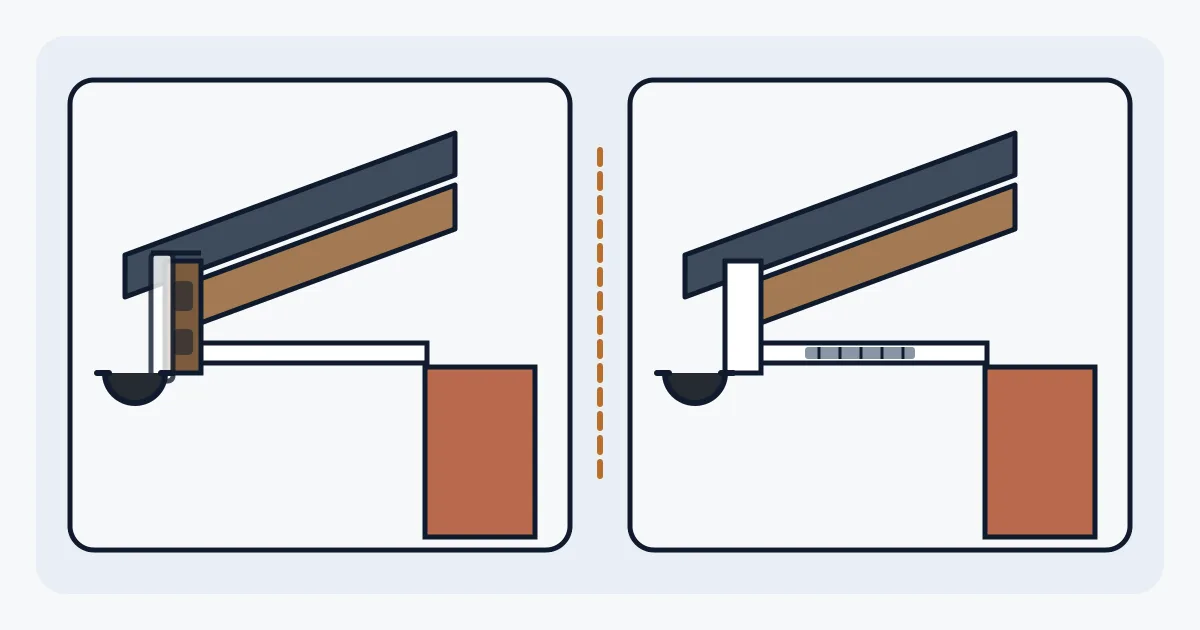
Fascia capping vs replacement is a choice between covering the boards you have and renewing them. Capping fits a new skin over existing timber that is still sound. Replacement removes the old fascia and soffit and fits new ones, so it also lets someone inspect the timber behind. The two are different jobs with different risks, and the cheaper one is only a bargain when the boards underneath are in good condition.
What fascia capping involves
Capping, sometimes called over-boarding or over-cladding, means fixing uPVC or aluminium covers over the existing fascia and, in some cases, the soffit. The old boards stay in place. The work is quicker than a full renewal because less is taken off, and it gives a clean, low-maintenance finish.
What full replacement involves
Replacement strips off the gutters, fascia and soffit, looks at what is underneath, and fits new boards and ventilation. It is the job described on our fascia, soffit and guttering replacement page. The main advantage is visibility: the contractor sees the rafter ends and the roof edge, which capping hides.
Fascia capping and full replacement compared
| Question | Capping | Full replacement |
|---|---|---|
| What happens to the old boards | Left in place and covered | Removed and replaced |
| What can be checked underneath | Only what is visible before covering | Rafter ends, board fixings and the roof edge |
| Best when | Timber is sound, firmly fixed and dry | Timber is soft, split or doubtful, or the roofline is being redone |
| Main risk | Hiding rot that keeps spreading behind the cover | Higher cost and more disruption |
| Ventilation | Existing vents may be covered unless taken into account | New vented soffit or vent strips can be fitted |
| Effect on gutters | Gutters come off and go back on, or are renewed | Usually renewed or refitted on new boards |
Fascia capping vs replacement: why the timber underneath decides
Capping needs a sound base. The cover has to be screwed or clipped into something solid, so soft, flaking or split boards make it a poor choice. Wet rot can spread from a leaking gutter into the board and then the rafter ends. If capping hides that, the damage can carry on out of sight until the cover starts to move. This is why a contractor should press the timber and look along the whole length, not just at the corners.
If a leaking gutter caused the rot, fix the water first. Our guide to gutter problems explained can help you trace it, and repair or replace guttering covers what to do when the gutters are the cause.
Ventilation behind the soffit
A roof space needs air to move through it. Many soffits carry vents or vent strips for that. A cover that blocks existing vents can cause problems with condensation in the loft. Ask the contractor how the new boards or cover will keep ventilation, and whether vent strips are included.
Fascia capping vs replacement and the asbestos question
Some older houses have soffit boards made of asbestos insulating board. Don't drill, cut or break them. HSE explains where asbestos can be found in homes. If the boards might contain it, get them assessed before anyone quotes for removal. Capping over intact boards may avoid disturbing them, but a competent person should decide that.
Fascia capping vs replacement: how the price differs
Capping generally costs less than renewal because less is removed and fewer materials are fitted. Even so, don't judge on that alone. A full roofline renewal ranges from about £1,800 to £5,000, depending on house size and the repairs needed, as the roofline replacement cost guide shows. Ask each contractor to price both options on the same elevations, and to say what happens if rot is found halfway through.
Combine the work with access
Both jobs need access at height. If scaffold is already going up, it is sensible to do the gutters at the same time. Our guide to access and scaffolding for gutter work explains how that changes the cost. On a house you're about to buy, see what to do when a survey flags the fascia.
What to ask before you agree
- Have you checked the timber under the boards, and how?
- What happens to the price if rot is found?
- How will the roof space stay ventilated?
- Could the soffits contain asbestos, and who will check?
- Does any guarantee cover the timber under a cover, or only the cover itself?
When you have answers, request free quotes and ask for capping and replacement to be priced side by side.
Frequently asked questions
Is fascia capping a good idea?
It can be, if the existing boards are sound, dry and firmly fixed. It's a poor choice over soft or rotten timber, because the cover can hide damage that continues to spread.
Does capping need the gutters taking down?
Usually yes, because the gutters are fixed to the fascia. They are taken down, the cover is fitted, and the gutters are refitted or renewed.
Can I tell if my soffits contain asbestos?
Not by looking. Some older soffit boards do, so don't drill or cut them. HSE guidance explains where asbestos can be found, and a competent person can assess the boards before work begins.
Ready to talk to a fascia, soffit and guttering replacement specialist?
Get Free Quotes →