
What does gutter replacement involve?
Replacing guttering means choosing a new rainwater system for a defined part of the house. The installer removes the agreed lengths and fittings, checks what will support them, then sets out the new run around its outlets. A rear elevation can be renewed on its own if there is a sound, compatible connection to the sections being kept.
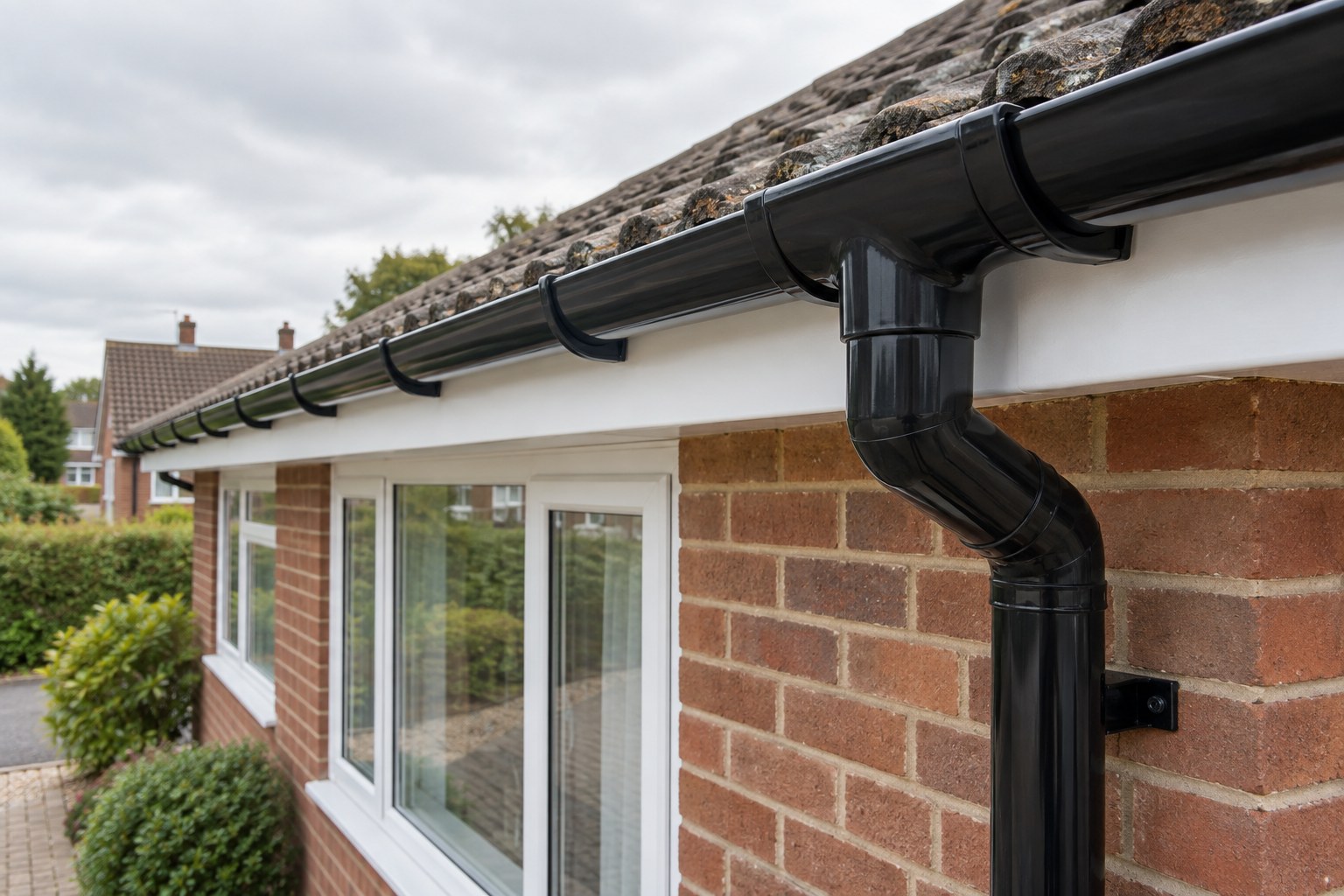
Signs you need gutter replacement
- Several gutter lengths have become brittle or split, leaving little sound material to repair
- Replacement seals or unions cannot be sourced for the existing profile
- Corrosion has opened holes in a metal run or weakened its fixings
- Repeated repairs have left mismatched sections which no longer sit correctly together
If only one or two of these apply, the signs your guttering is failing checklist can help you judge whether repair is still realistic, repair or replace guttering weighs the two directly, and gutter problems explained follows the water from roof edge to drain to show where a fault really starts.
Details that change the proposed work
Half-round, square and ogee describe the shape of the gutter; deep-flow products offer a different capacity. The choice needs to suit the roof area draining into it and the number and position of outlets. Simply fitting a bigger gutter will not cure a restricted downpipe or blocked gully. What size gutter do I need explains how roof area and outlets set the capacity, and gutter profiles compared sets the shapes side by side.
uPVC, cast iron and aluminium need their own compatible fittings and installation methods. A seamless aluminium length still has ends, outlets and corners that need careful detailing. If only part of the system is changing, ask how the new profile will join the retained gutter and whether any neighbouring property shares that run. Seamless vs sectional guttering and cast iron vs heritage-style guttering cover the main build and material choices, and shared guttering explains who pays when a run crosses a boundary.
From inspection to a working rainwater route
- Measure each elevation and identify outlet positions before ordering the system
- Set up suitable access and protect paving, windows and planting below removal work
- Take down the agreed guttering and inspect the fascia where brackets were fixed
- Fit supports, lengths, angles and outlets to the chosen manufacturer’s instructions
- Connect sound retained downpipes or install the replacements included in the quotation
- Check the discharge route, test the completed run and remove old fittings and offcuts
What to put in your enquiry
Give the number of elevations you want renewed and say whether you want to retain the existing colour, shape and downpipes. Ask for the product range in writing, together with the allowance for damaged fixing surfaces discovered during removal.
A starting budget for gutter replacement
The £650–£1,800 guide is most useful for straightforward domestic uPVC replacement. Cast iron, bespoke aluminium, long runs and difficult access can exceed it. Count corners and downpipes as well as metres: a simple straight elevation needs fewer fittings than a roofline turning around several bays.
These are indicative allowances, not a fixed offer. Ask for the total including VAT where applicable, attendance, access, materials and disposal, with exclusions stated before you book.
Our gutter replacement cost guide breaks this range down by house size and material, from a single elevation to a detached house on scaffold. The guttering cost calculator compares replacement with repair for the same job size.
Access and property checks
Access must be chosen for the task and the site, including the ground conditions, reach and time needed. A low roof does not automatically make a ladder suitable. Leave close inspection to the contractor and take enquiry photographs from a safe position on the ground. Access and scaffolding for gutter work explains how ladders, towers and scaffold compare and why they are priced separately.
Where a building is listed or subject to local restrictions, check the proposed changes with the relevant authority before work starts. A matching colour does not, on its own, mean consent is unnecessary. The Planning Portal explains listed building consent; ask your local authority about the particular proposal.
After the work
Before access equipment leaves, ask for photographs of the completed outlets and any concealed fascia repairs. Keep the product details so a replacement fitting can be identified later, and ask which maintenance conditions apply to the installer’s guarantee.
Questions before booking
Can the new gutter connect to my neighbour’s existing run?
That depends on the profiles and ownership of the shared gutter. Ask the installer to check compatibility and agree any work affecting the adjoining property before removal starts.
Does a larger gutter always stop overflow?
No. An obstructed outlet, an inadequate downpipe or a poor discharge route can still hold water back. The proposed system needs to be assessed as a connected route from roof to drain.
Ask for a quotation for the work you need
My Guttering Prices can match one enquiry with local businesses for up to four quotations, subject to availability. Joining companies are asked for relevant insurance details and references. You appoint and pay the chosen contractor directly; this website does not perform the work or employ the specialists.
Describe your guttering job and compare the proposed repair or replacement scope before accepting a price.