
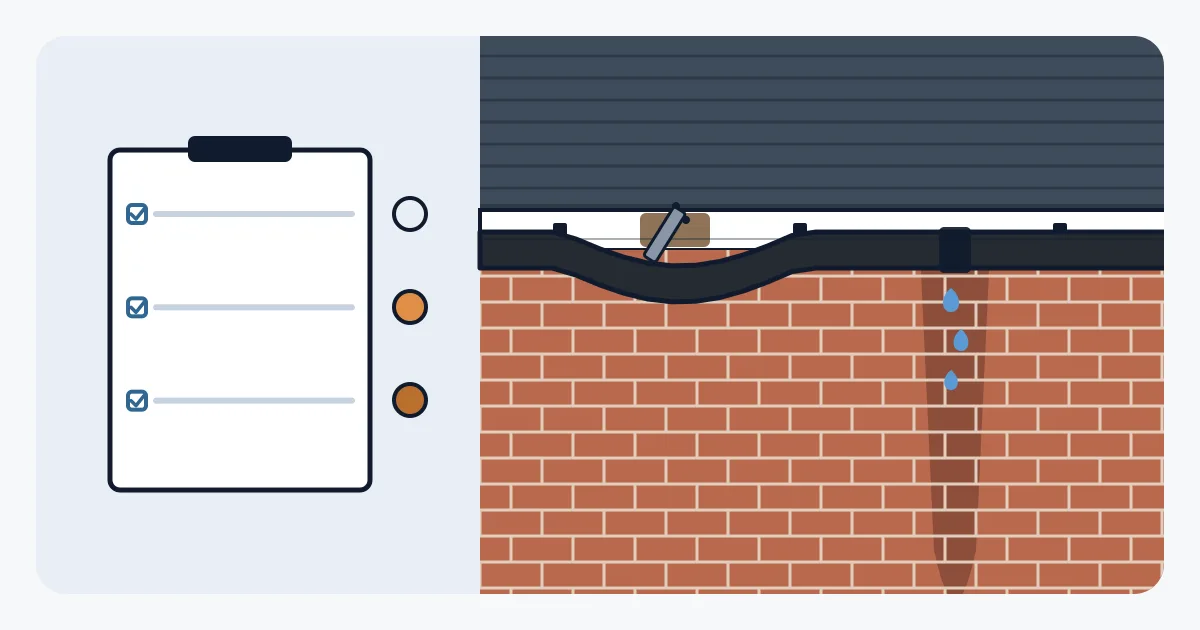
Gutters rarely fail all at once. The signs of gutter damage build up over years, a streak here and a drip there, and most of them can be seen without going up a ladder. Spotting that something is wrong is the easy part, but what you need to know is how soon it matters. A slightly faded gutter can go on for years; a fascia that's letting go of its brackets can't.
Below, the usual signs of gutter damage are grouped by how quickly they need dealing with. Look at each elevation from the ground, ideally once in autumn and once in spring, and again during a proper downpour if you can do so safely. Binoculars or the zoom on a phone camera are all the equipment you need.
Everything on this list can be seen with both feet on the ground or from inside the house. Leave anything closer to a contractor with suitable access. A low roof doesn't make a ladder safe.
Level 1: signs of gutter damage to keep watching
These are early signs of age or minor wear. On their own they don't need a booking, but note them and check again after the next season. If they spread or combine with signs from level 2, act.
- Faded or chalky plastic. UV breaks down the surface of uPVC over time. It's cosmetic at first, but the material gradually becomes more brittle
- Small weeds or moss at the gutter edge. This usually means debris is sitting in the channel. It isn't a defect in itself, but it adds weight and can hide a blocked outlet
- Paint starting to flake on timber fascia. An early warning that the board's protection is failing, and worth watching over the next winter
- A slight streak below one fitting that only appears after very heavy rain
Level 2: signs of gutter damage that need a repair before winter
These signs mean water is going somewhere it shouldn't, or the gutter is losing its support. Left through a wet winter, they tend to get worse and can start to affect the walls below. Most fall within gutter repairs, leaking gutter repairs or downpipe replacement and repairs.
- A visible dip in the gutter line, or water still standing in the gutter a few hours after rain
- A drip that forms under the same joint or corner every time it rains
- Water spilling over the front edge in ordinary rain, not just in a cloudburst
- A bracket hanging loose or missing, with the gutter dropping between the neighbouring supports
- A green or dark vertical streak on the wall below one point of the gutter
- A downpipe standing away from the wall, missing a clip, or leaking at a socket
The gutter repair cost guide sets out what these jobs typically cost. If you're not sure which repair a sign points to, gutter problems explained traces the water's route from the roof to the drain.
Level 3: signs of gutter damage that point to replacement
These signs suggest the system, or the boards it hangs from, is near the end of its useful life. Further repairs may still be possible, but it's worth getting gutter replacement or fascia, soffit and guttering replacement priced so you can compare.
- Several lengths cracked or split, or new cracks appearing after each repair
- Leaks moving from joint to joint along a run even after reseals
- Brackets that keep loosening, or a sag running along several metres rather than at one point
- Fascia boards that look soft, swollen or dark where the brackets are fixed, or soffit panels coming apart at their joints
Older metal gutters have one extra sign of their own: rust staining or holes, especially at joints and along the bottom of the channel. On a period house, ask whether repair, like-for-like replacement or a different material is most suitable.
Signs inside the house
Gutter faults sometimes show up indoors first. A damp patch high on an outside wall, near the ceiling, especially directly beneath a gutter joint or outlet, can come from water running down the outside of the wall. Mould in an upstairs corner near the eaves is worth checking against the gutter above it. Damp has many causes, so this isn't proof, but it's a good reason to look at the gutter outside the same spot next time it rains.
When signs combine
One sign from level 2 is a repair. Several level 2 signs on the same elevation, or any level 3 sign, change the sums. Paying for three separate repair visits on a tired system can come close to the cost of replacing that elevation. The guttering cost calculator lets you compare the two quickly, and if you're buying a house where a survey has picked up these signs, see what to do when a survey flags gutter defects. If a storm caused the damage, is gutter damage covered by home insurance explains what to photograph first.
Frequently asked questions
How long does uPVC guttering last?
It varies with the product, the exposure and how well it was installed, but many uPVC systems last for decades. Expect the rubber seals at the unions to give trouble well ahead of the lengths they connect.
When is the best time to check gutters?
Autumn, after the leaves have fallen, and again in spring are good times. Looking during heavy rain shows problems you won't see on a dry day.
Can failing gutters cause damp inside?
They can contribute. Water running down a wall for long periods can soak into masonry. Damp has several possible causes, so it's worth checking the gutter above any damp patch but not assuming it's the only cause.
Ready to talk to a gutter replacement specialist?
Get Free Quotes →